The answer may surprise you.

Most people would guess agricultural grains, plastic polymers, or chemical fertilizers. After all, these are among the world’s most traded bulk commodities.

But the most frequently shipped “commodity” isn’t a commodity at all. It’s unused space.

Every day, countless shipping containers leave ports around the world carrying significant amounts of air instead of product. This hidden inefficiency costs manufacturers, distributors, and logistics providers millions in unnecessary transportation expenses.

Why Are Shipping Containers Not Fully Utilized?

A standard 20-foot shipping container offers 33 m³ of loading volume. For bulk materials with a bulk density below 0.8 t/m³, the limiting factor is usually volume, not the maximum payload of around 28 tonnes in intermodal transport.

Despite this, many bulk materials are still transported in FIBCs (Big Bags).

While Big Bags are convenient for handling, they introduce several inefficiencies:

  • Pallets occupy valuable container space.
  • Gaps between bags reduce loading efficiency.
  • Forklift access requires additional unused volume.
  • The container cannot be filled to its maximum capacity.

The result? A considerable portion of every container is effectively transporting air instead of saleable product.

The Hidden Cost of Shipping Air

When shipping low-density bulk materials, every cubic meter matters.

Whether you transport:

  • Plastic pellets
  • Food ingredients
  • Minerals
  • Chemical powders
  • Agricultural products

unused container volume directly impacts your logistics costs.

This results in more containers being required for the same shipment volume, leading to higher ocean freight costs and increased CO₂ emissions per tonne of product transported. It also means more loading and unloading operations and higher packaging costs. For companies shipping thousands of tonnes annually, these inefficiencies can quickly add up and become a significant operating expense.


A More Efficient Alternative: Linerbags

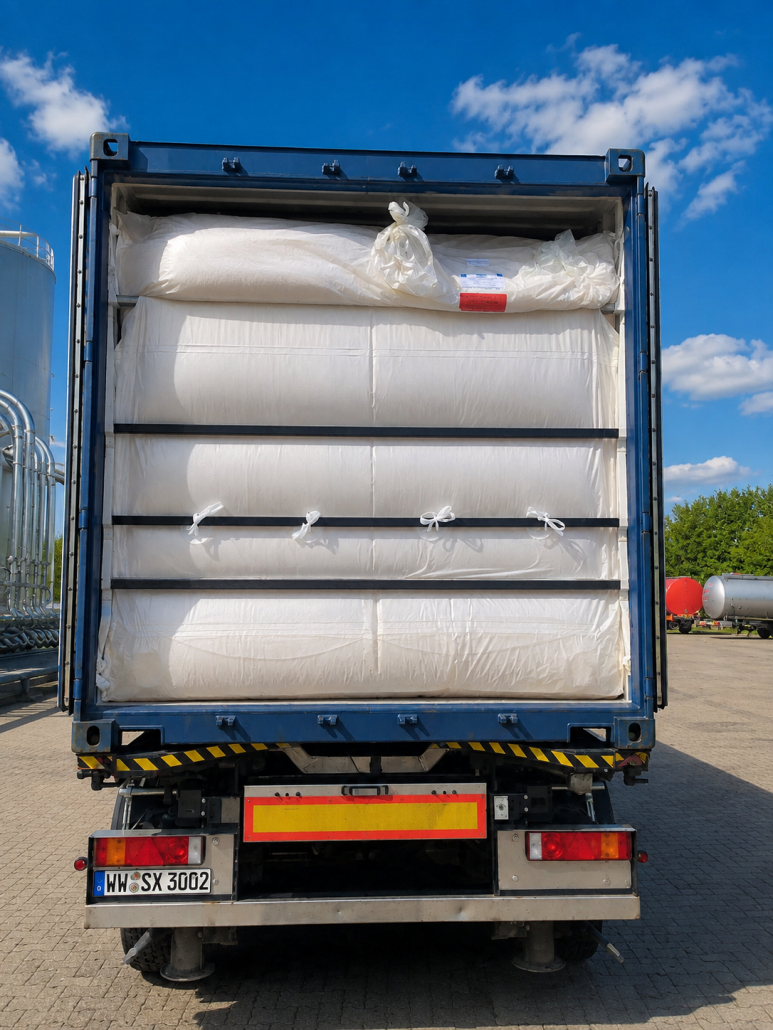
Instead of filling containers with palletized FIBCs, many bulk materials can be loaded directly into linerbags installed inside standard ISO shipping containers.

Linerbags utilize nearly the entire internal volume of the container, allowing significantly higher payloads while reducing packaging material and handling requirements.

Key advantages include:

  • Maximum utilization of container volume
  • Higher payload per shipment
  • Reduced transportation cost per tonne
  • Less packaging waste
  • Fewer handling operations
  • Cleaner loading process

Full Payload Container with Linerbag

Making Full Payloads Possible

Loading a linerbag efficiently requires the right technology.

WWTec develops mobile and stationary loading systems that enable efficient filling of linerbags inside standard shipping containers. These systems are designed for industrial bulk materials and help customers maximize container utilization while maintaining reliable, dust-controlled loading processes.

By optimizing the loading process, companies can:

  • Increase transported product per container
  • Reduce logistics costs
  • Improve supply chain efficiency
  • Make better use of existing shipping capacity


Stop Shipping Air

In today’s logistics environment, every container counts.

Before looking for lower freight rates, it is worth asking a simpler question: How much of your container is actually carrying product and how much is just air? Optimizing container utilization is often one of the fastest ways to reduce transportation costs while improving operational efficiency.

If your company ships bulk materials in ISO containers, WWTec can help you unlock the full potential of every shipment. Contact us for more information and free support.
Europe’s chemical supply chains are under unprecedented pressure. Geopolitical instability, rising energy costs, tightening environmental regulations and the push for circularity are reshaping the way raw materials move across the continent. For chemical producers, recyclers and distributors, one question has become central: How can supply chains remain resilient without sacrificing competitiveness?

Today’s challenges extend far beyond long-distance transportation. Companies must navigate:

  • Fragmented and fluctuating material flows driven by volatile global markets
  • Integration of recycled or alternative feedstocks into existing production environments
  • Increased demand for dust-free, contamination-controlled handling, especially for high-quality or food-grade materials
  • Reduction of packaging waste and CO₂ emissions
  • The need for flexibility when transport modes, ports or suppliers change on short notice

What used to be stable, linear logistics structures are now dynamic networks that require constant adaptation. Disruptions no longer happen occasionally — they occur simultaneously and unpredictably.

Smarter Bulk-Handling Solutions as a Competitive Advantage

At WWTec, we support customers across the chemical, plastics and recycling industries in strengthening resilience at the bulk-material level. Our solutions are designed to make supply chains safer, more adaptable and more efficient, especially when transport volumes shift or routes must be reconfigured quickly.

Below are some of the technologies that can help companies regain competitiveness:

  1. Container Shipments With Liner Bags

Switching from FIBCs to sea containers with liner bags brings immediate benefits:

  • Significant reduction of packaging waste
  • Cleaner, sealed and contamination-safe transport
  • Lower handling effort across the entire chain
  • Ideal for recyclates, powders and sensitive materials
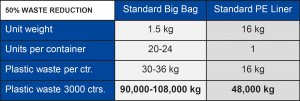
Liner Plastic Waste Comparison

Comparing FIBCs and Linerbags

This approach supports both circularity goals and cost reduction.

  1. Multi-format Container & Silo Truck Unloading

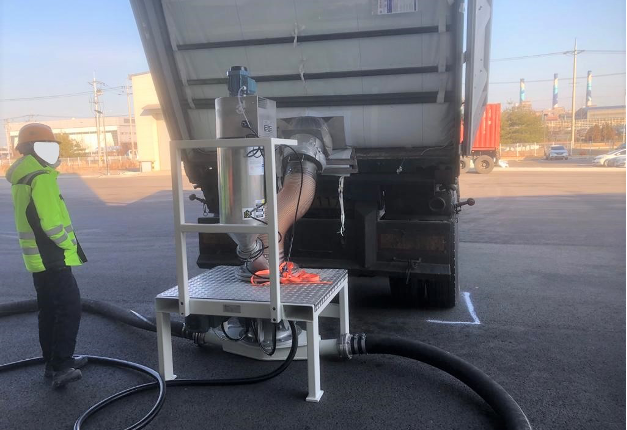
Our CES (Container Emptying Station) enables companies to accept multiple packaging formats using one setup:

  • Sea containers with liner bags
  • FIBCs (big bags)
  • Silo trucks
CES Kombi Station

CES Kombi Station

This ensures supply flexibility when availability fluctuates, ports change or sourcing strategies evolve. It also reduces dependence on single suppliers.

  1. Dust- and Contamination-Controlled Processes

As materials become more diverse — especially in recycling and food-grade applications — dust control plays a crucial role. Our systems:

  • Improve operator safety
  • Reduce contamination risks
  • Protect product quality and plant equipment
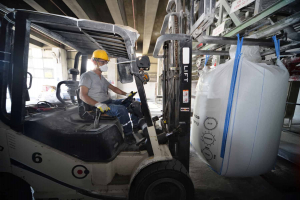
Big Bag Handling

If your bulk handling looks like this, we can improve it.

This is essential for companies transitioning toward higher usage of recyclates or dangerous powder materials.

  1. Modular and Mobile Equipment

WWTec systems can be deployed as:

  • Permanent installations
  • Modular expansions
  • Mobile and relocatable units

This allows companies to scale capacity quickly, avoid major infrastructure investments and maintain flexibility even under shifting market conditions.

Building Resilience in an Era of Constant Disruption

In today’s environment, disruptions rarely happen one at a time. Flexibility and adaptability have become strategic advantages — not just in global logistics, but directly at the point where materials enter production. For Europe’s chemical industry (and any other bulk handling industry like food or recycling) to remain competitive over the next decade, supply chain resilience must begin at the bulk-handling level. Cleaner, safer and more adaptable bulk logistics are no longer operational upgrades. They are a foundation for future-proof, circular and efficient supply chains.

The EU’s new Packaging and Packaging Waste Regulation (PPWR) is set to transform how packaging is designed, used, and disposed of across the European market. Although much attention has focused on consumer goods, the regulation explicitly applies to all packaging, including that used in industrial and commercial supply chains: “EU law covers all packaging and packaging waste on the European market, including all materials and packaging in commercial, household, industrial and other sectors.”
(European Commission – Packaging Waste)

This means that companies transporting bulk solids such as chemicals, polymers, minerals, fertilizers, or food ingredients are directly in scope. All transport packaging placed on the EU market must comply with obligations around:

  • Recyclability by 2030 (Art. 6 PPWR, Regulation (EU) 2025/40)
  • Minimum recycled content in plastic packaging (Art. 7 PPWR)
  • Reuse and refill targets for certain packaging categories (Arts. 26–28 PPWR)
  • Minimization of material use and empty space (Art. 9 PPWR)
  • Restrictions on substances of concern (Art. 5 PPWR)

Because these requirements apply at the point of placing packaging on the EU market, industrial transport packaging such as big bags, IBCs, and container liners are squarely within scope – not just packaging visible to end consumers.


Which Packaging Formats Are Affected?

The PPWR does not differentiate between consumer-facing and industrial transport packaging. All packaging is covered (Art. 3, Regulation (EU) 2025/40). For bulk solids, this includes:

  • Big bags (FIBCs) used for powders, granules, or crystalline products.
  • Intermediate bulk containers (IBCs) for solid and liquid raw materials.
  • Container linerbags, which turn shipping containers into bulk carriers.
  • Heavy-duty sacks, films, and shrink hoods used in industrial transport.

Each format must meet recyclability and recycled-content obligations. While rigid packaging such as IBCs may be better suited to reuse systems, flexible packaging like FIBCs and linerbags will be assessed on recyclability, recycled content integration, and minimization of material use.


Minimum recycled content targets under PPWR

The most influential piece of this new legislation is the requirement to have a minimum content of recycled material in any packaging. Building on the previous targeted requirements laid out by the Single Use Plastics Directive, Article 7 expands minimum recycled content requirements to four primary plastic packaging categories.

The requirements outlined by the Article are as follows (% Deadline 2030 (% Deadline 2040)):

  • 30% (50%) for contact-sensitive PET packaging, excluding single-use beverage bottles.
  • 10% (25%) for contact-sensitive packaging made from other plastics, excluding single-use beverage bottles.
  • 30% (65%) for single-use plastic beverage bottles.
  • 35% (65%) for other types of plastic packaging, meaning packaging not covered by the above categories (non-contact-sensitive, non-single-usebottles, etc.

While provisions are included which allow for chemical recycling to contribute to these requirements, a large variety of processes and methodologies must first be established at various levels of EU lawmaking (Veolia Legislation Breakdown).

Only if the packaging is classified as contact-sensitive (direct food/pharma packaging) would the lower thresholds (10% → 25%) apply. Furthermore exemptions are made for packaging of dangerous goods.


Linerbags vs. FIBCs Under PPWR – A Strategic Advantage?

When comparing shipping container linerbags with FIBCs (big bags), linerbags may hold a strategic advantage in meeting PPWR requirements:

  1. Material Efficiency
    • Linerbags typically use around 16 kg of mono-material polyethylene film for a 20-foot container load.
    • The same shipment packed in FIBCs requires 20–24 big bags, each weighing about 1.5 kg—adding up to 30–36 kg of packaging material.
    • With packaging minimization now a legal obligation (Art. 9 PPWR), linerbags clearly outperform FIBCs in terms of resource efficiency.
Liner Plastic Waste Comparison

Comparing FIBCs and Linerbags

  1. Economic Advantage Under Recycled-Content Rules
    • As recycled content becomes mandatory (Art. 7 PPWR), packaging material costs are expected to rise.
    • Using less material per shipment gives linerbags a significant cost advantage over FIBCs: half the packaging weight means lower exposure to higher future costs.
  2. Recyclability
    • Linerbags are typically mono-material PE, making them easier to recycle in existing film recycling streams.
    • FIBCs often combine woven PP with liners or coatings, complicating recyclability and risking non-compliance.
  3. Recycled Content Integration
    • Film-based PE liners are generally more compatible with recycled resin incorporation compared to woven PP fabrics, which demand high tensile strength.
  4. Reuse Potential
    • While FIBCs can be reused, this requires inspection, cleaning, and a return system, which is often impractical for bulk solids due to contamination risks.
    • Linerbags, though usually single-use, are lightweight and recyclable, supporting compliance through recycling rather than reuse.
  5. Operational Efficiency
    • Linerbags transform standard shipping containers into bulk carriers, allowing larger loads, less handling steps in loading and unloading and fewer packaging units per shipment – another indirect advantage under the PPWR’s minimization principle.

The PPWR is designed to accelerate Europe’s transition to a circular economy for packaging. For producers and shippers of bulk solids, it brings packaging into the compliance spotlight.

While all formats – FIBCs, IBCs, and liners – must adapt to recyclability and recycled-content requirements, linerbags offer a compelling pathway. With lower material use, simpler recyclability, and easier integration of recycled content, they may prove to be the most future-proof option under the new rules.

For companies operating in global supply chains, aligning packaging choices with the PPWR is no longer just about compliance. It is about gaining an economic and sustainability edge in a regulatory environment where packaging performance is measured not only in logistics terms but also in environmental impact.

Many companies involved in bulk solid production and transportation are now switching to linerbags or updating their current procurement of those. While suppliers of linerbags are relatively easy to find, specialized manufacturers of machinery to load and discharge bulk solids from linerbags are more difficult to encounter. WWTec has been supporting the trend towards linerbags for over 20 years and is an expert in loading and unloading equipment for all kinds of bulk materials. Many linerbag suppliers recommend WWTec’s solutions as the best in the market, often referencing the Siloadmaxx portfolio which is developed and distributed by WWTec around the world. If you are working on shifting your supply chain from Big Bags to Linerbags and want to profit from its advantages contact WWTec today to get support for your project.

“Ref, how long do we have left?”

A sentence that every active amateur footballer has heard many times. This is now a thing of the past, at least at SV Marienrachdorf home games. Together with the local companies Bioturm GmbH and Starnet, WWTec and Siloadmaxx GmbH & Co KG have sponsored a digital scoreboard.

SV Marienrachdorf has been characterised by excellent youth work for many years and is one of very few clubs in our region that still manages to get by without team collaborations with other clubs. We find this aspect particularly worthy of support and were happy to participate.

We were pleased when the scoreboard was inaugurated at the derby with a 6:0 home win.

Of course, we hope that the scoreboard will always be showing more goals for the home team in the long run.

WWTec GmbH & Co. KG, a company that specializes in bulk handling solutions, is pleased to announce that it has achieved the “Safety Certificate Contractors” (SCC) certification. This certification is an important recognition of the company’s commitment to workplace safety and its efforts to provide a safe and healthy work environment for its employees and customers.

The SCC certification scheme is specifically designed for contractors working in high-risk industries such as construction, chemical, and petrochemical and requires contractors to meet strict health, safety, and environmental management standards, including procedures for risk assessment, accident prevention, and emergency response.

Achieving SCC certification is a rigorous process that involves an evaluation of the company’s health and safety management system, an on-site inspection, and an assessment of the qualifications and training of employees. WWTec has worked diligently with its partner Hagen Consulting to implement robust health and safety management systems that meet the highest standards, ensuring that its operations are safe, reliable, and sustainable.

“We are proud to have achieved SCC certification, which demonstrates our commitment to workplace safety and our dedication to providing the highest level of service to our customers,” said WWTec CEO Lars Hanses. “We understand the importance of maintaining a safe and healthy work environment, and we are committed to continuously improving our health and safety practices.”

WWTec added the SCC certification to its already established ISO 9001:2015 certification. This is a testament to its commitment to excellence in all aspects of its business. The company’s customers can be assured that they are working with a trusted partner that prioritizes safety and reliability. WWTec looks forward to continuing to provide innovative and efficient bulk handling solutions while maintaining the highest standards of workplace safety.

You can view a copy of our certificates in the “Downloads” section.

The switch from FIBCs to loose container shipments has never been easier – even across the ocean. For a newly built plant, they wanted to be more flexible in receiving goods on the one hand and more cost-effective in transporting them on the other. With the Junior Cube unloading module, WWTec was able to deliver a customized solution from its modular design that combines both advantages.

In addition to the unloading module, WWTec also provides the peripherally required process resources in a technology container. Conveying air and process air compressors as well as the control system for the equipment are located in a 20-foot standard container. This design has additional advantages besides easy transport to Korea. The customer will not use the equipment continuously throughout the year. For these phases, the standard container offers enough storage space to also accommodate the Junior Cube unloading module. Then, after disconnecting the air and power connections, the container can be conveniently stored in a place that is not needed.

Here, however, WWTec is not yet finished with the flexibility offered. The customer can also use the compressors installed in the technology container for unloading silo vehicles. For this, the operator only has to select the desired operating mode on the touchpad and can establish the safe unloading line via 2 couplings to be connected. The touchpad is also used to communicate at all times with the plant’s control station in order to obtain safety-related approvals prior to unloading.