
What Is the Most Frequently Shipped Commodity in the World?
The answer may surprise you.
Most people would guess agricultural grains, plastic polymers, or chemical fertilizers. After all, these are among the world’s most traded bulk commodities.
But the most frequently shipped “commodity” isn’t a commodity at all. It’s unused space.
Every day, countless shipping containers leave ports around the world carrying significant amounts of air instead of product. This hidden inefficiency costs manufacturers, distributors, and logistics providers millions in unnecessary transportation expenses.
Why Are Shipping Containers Not Fully Utilized?
A standard 20-foot shipping container offers 33 m³ of loading volume. For bulk materials with a bulk density below 0.8 t/m³, the limiting factor is usually volume, not the maximum payload of around 28 tonnes in intermodal transport.
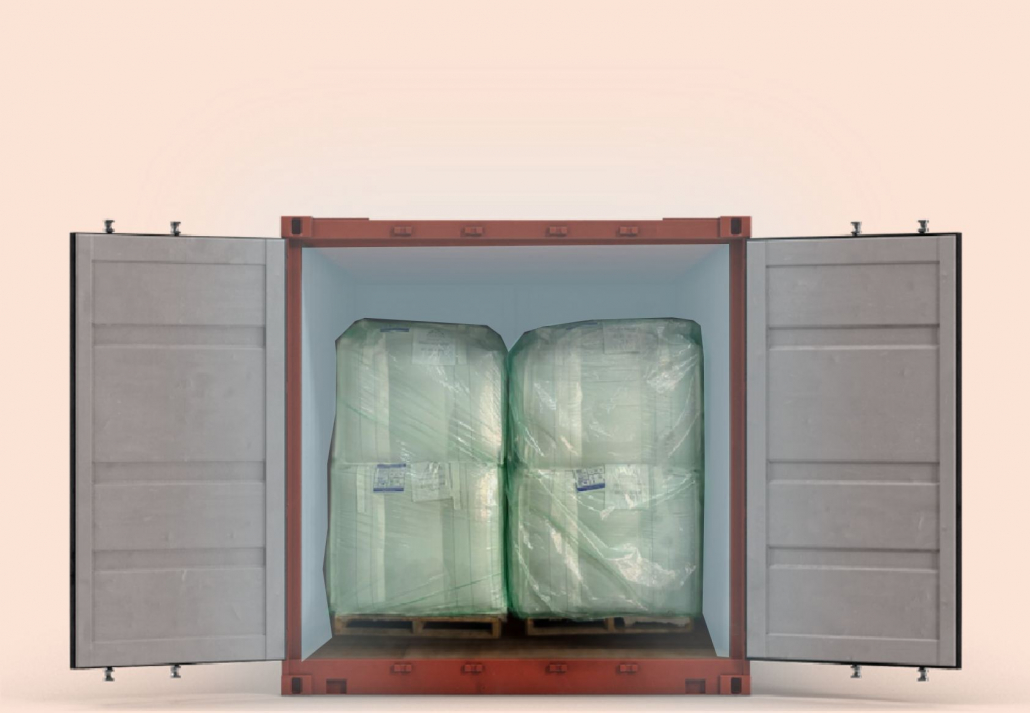
Despite this, many bulk materials are still transported in FIBCs (Big Bags).
While Big Bags are convenient for handling, they introduce several inefficiencies:
- Pallets occupy valuable container space.
- Gaps between bags reduce loading efficiency.
- Forklift access requires additional unused volume.
- The container cannot be filled to its maximum capacity.
The result? A considerable portion of every container is effectively transporting air instead of saleable product.
The Hidden Cost of Shipping Air
When shipping low-density bulk materials, every cubic meter matters.
Whether you transport:
- Plastic pellets
- Food ingredients
- Minerals
- Chemical powders
- Agricultural products
unused container volume directly impacts your logistics costs.
This results in more containers being required for the same shipment volume, leading to higher ocean freight costs and increased CO₂ emissions per tonne of product transported. It also means more loading and unloading operations and higher packaging costs. For companies shipping thousands of tonnes annually, these inefficiencies can quickly add up and become a significant operating expense.
A More Efficient Alternative: Linerbags
Instead of filling containers with palletized FIBCs, many bulk materials can be loaded directly into linerbags installed inside standard ISO shipping containers.
Linerbags utilize nearly the entire internal volume of the container, allowing significantly higher payloads while reducing packaging material and handling requirements.
Key advantages include:
- Maximum utilization of container volume
- Higher payload per shipment
- Reduced transportation cost per tonne
- Less packaging waste
- Fewer handling operations
- Cleaner loading process
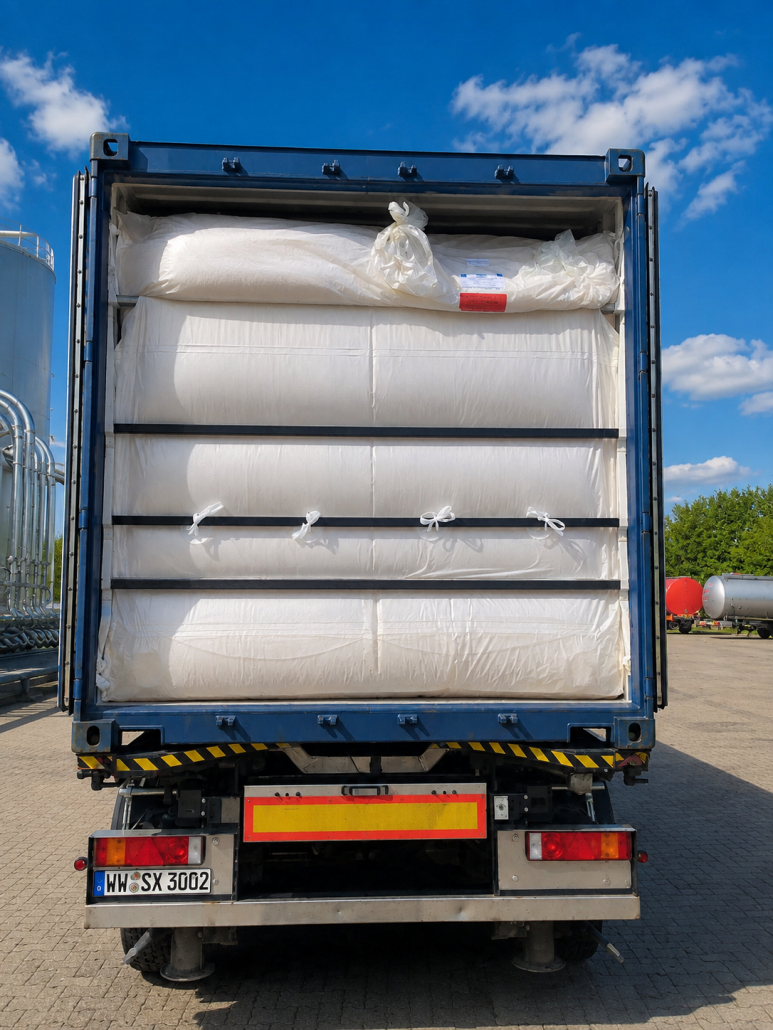
Full Payload Container with Linerbag
Making Full Payloads Possible
Loading a linerbag efficiently requires the right technology.
WWTec develops mobile and stationary loading systems that enable efficient filling of linerbags inside standard shipping containers. These systems are designed for industrial bulk materials and help customers maximize container utilization while maintaining reliable, dust-controlled loading processes.
By optimizing the loading process, companies can:
- Increase transported product per container
- Reduce logistics costs
- Improve supply chain efficiency
- Make better use of existing shipping capacity
Stop Shipping Air
In today’s logistics environment, every container counts.
Before looking for lower freight rates, it is worth asking a simpler question: How much of your container is actually carrying product and how much is just air? Optimizing container utilization is often one of the fastest ways to reduce transportation costs while improving operational efficiency.
If your company ships bulk materials in ISO containers, WWTec can help you unlock the full potential of every shipment. Contact us for more information and free support.
