
Future-Proof Bulk Material Handling: How European Chemical Supply Chains Can Stay Resilient
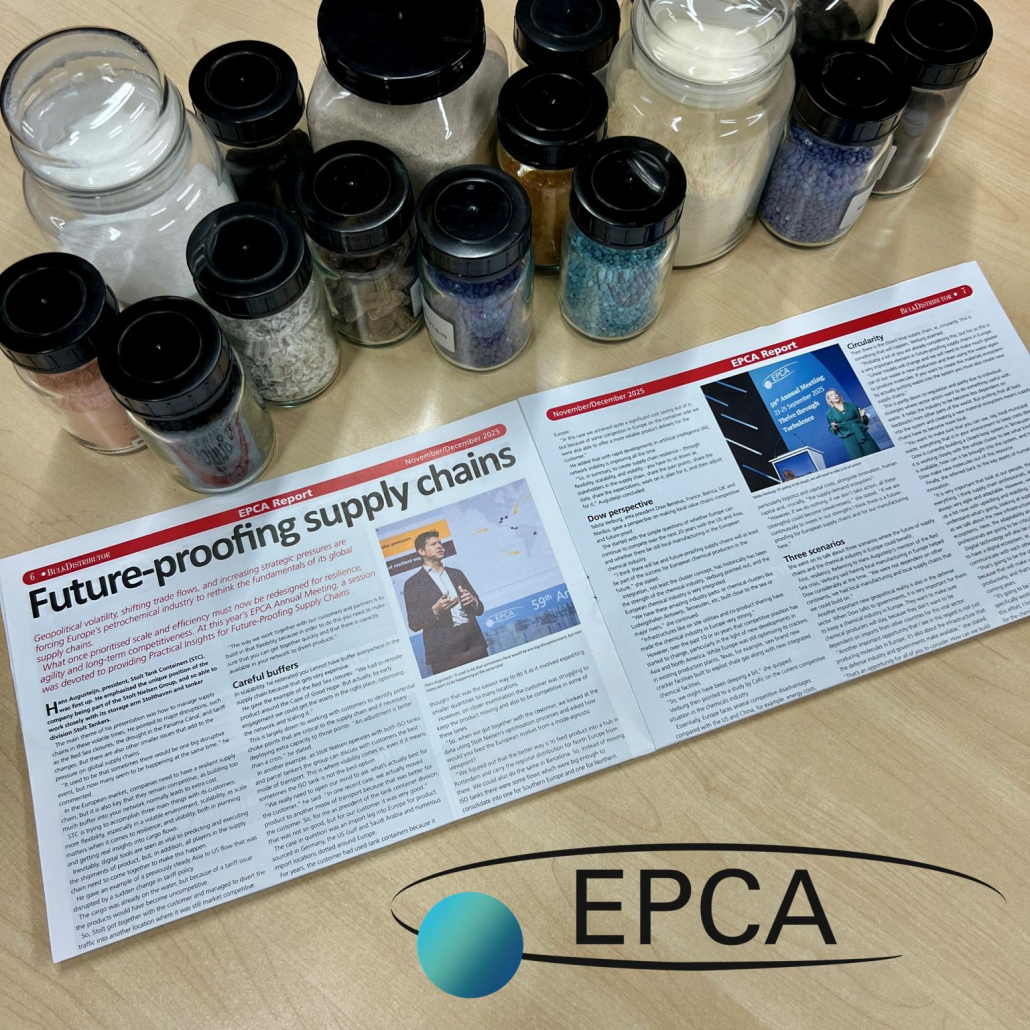
Europe’s chemical supply chains are under unprecedented pressure. Geopolitical instability, rising energy costs, tightening environmental regulations and the push for circularity are reshaping the way raw materials move across the continent. For chemical producers, recyclers and distributors, one question has become central: How can supply chains remain resilient without sacrificing competitiveness?
Today’s challenges extend far beyond long-distance transportation. Companies must navigate:
- Fragmented and fluctuating material flows driven by volatile global markets
- Integration of recycled or alternative feedstocks into existing production environments
- Increased demand for dust-free, contamination-controlled handling, especially for high-quality or food-grade materials
- Reduction of packaging waste and CO₂ emissions
- The need for flexibility when transport modes, ports or suppliers change on short notice
What used to be stable, linear logistics structures are now dynamic networks that require constant adaptation. Disruptions no longer happen occasionally — they occur simultaneously and unpredictably.
Smarter Bulk-Handling Solutions as a Competitive Advantage
At WWTec, we support customers across the chemical, plastics and recycling industries in strengthening resilience at the bulk-material level. Our solutions are designed to make supply chains safer, more adaptable and more efficient, especially when transport volumes shift or routes must be reconfigured quickly.
Below are some of the technologies that can help companies regain competitiveness:
- Container Shipments With Liner Bags
Switching from FIBCs to sea containers with liner bags brings immediate benefits:
- Significant reduction of packaging waste
- Cleaner, sealed and contamination-safe transport
- Lower handling effort across the entire chain
- Ideal for recyclates, powders and sensitive materials
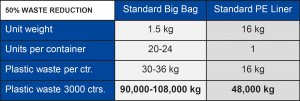
Comparing FIBCs and Linerbags
This approach supports both circularity goals and cost reduction.
- Multi-format Container & Silo Truck Unloading
Our CES (Container Emptying Station) enables companies to accept multiple packaging formats using one setup:
- Sea containers with liner bags
- FIBCs (big bags)
- Silo trucks

CES Kombi Station
This ensures supply flexibility when availability fluctuates, ports change or sourcing strategies evolve. It also reduces dependence on single suppliers.
- Dust- and Contamination-Controlled Processes
As materials become more diverse — especially in recycling and food-grade applications — dust control plays a crucial role. Our systems:
- Improve operator safety
- Reduce contamination risks
- Protect product quality and plant equipment
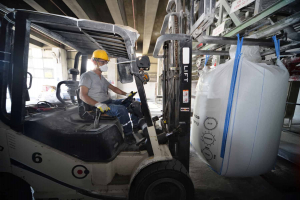
If your bulk handling looks like this, we can improve it.
This is essential for companies transitioning toward higher usage of recyclates or dangerous powder materials.
- Modular and Mobile Equipment
WWTec systems can be deployed as:
- Permanent installations
- Modular expansions
- Mobile and relocatable units
This allows companies to scale capacity quickly, avoid major infrastructure investments and maintain flexibility even under shifting market conditions.
Building Resilience in an Era of Constant Disruption
In today’s environment, disruptions rarely happen one at a time. Flexibility and adaptability have become strategic advantages — not just in global logistics, but directly at the point where materials enter production. For Europe’s chemical industry (and any other bulk handling industry like food or recycling) to remain competitive over the next decade, supply chain resilience must begin at the bulk-handling level. Cleaner, safer and more adaptable bulk logistics are no longer operational upgrades. They are a foundation for future-proof, circular and efficient supply chains.
